top of page

Blogs & News


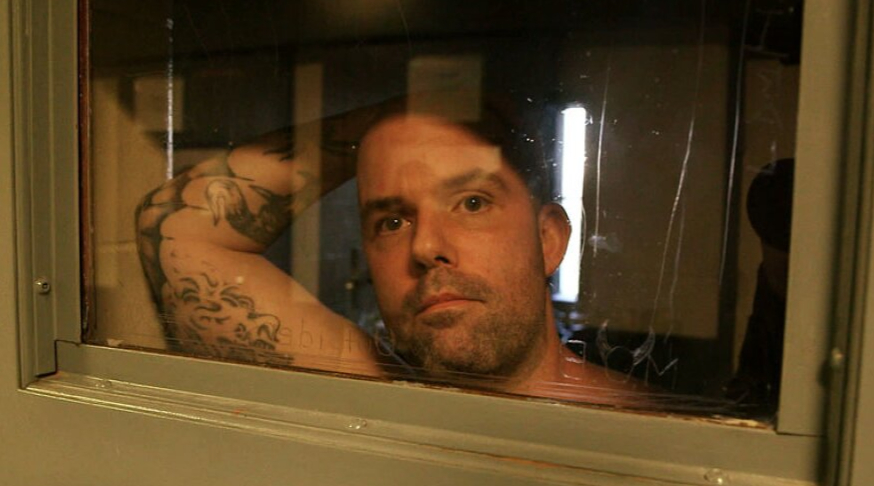
Inmate says he faced retaliation after speaking out about Eastern prison fire
Theodore Johnson Theodore Johnson says he was wrongly placed in solitary and faced other retaliation after speaking publicly about Marcos Alcaraz’s death at Eastern Correctional Facility Read the full article in the Times Union.

Times-Union
5 days ago


Can a ‘Teach for America’ Model Save Public Defense?
Public defenders are overworked and underpaid. A growing corps of client advocates is helping defendants in communities across the U.S.

The New York Times
Sep 15
Society Impact Releases Public Benefit Progress Statement
Society Impact has released its Public Benefit Progress Statement, outlining our objectives, the standards we use to measure progress, and the work we have completed or advanced.

Benjamin Miller
Aug 27


Rewriting Our Narratives Behind the Walls: A Poetry & Creative Writing Class at Maine State Prison
My name is Gordon Perry, and I am an incarcerated resident at Maine State Prison. Several months ago, Frank Zarro, the founder of Society Impact, hired me for a remote position with his organization. I met Frank and the brains behind Society Impact Ben Miller while attending weekly meetings for “Parole4ME” & the “MPAC legislative Group” where I have been an active member for the last couple of years, roughly. Over that six to eight month span of working together, Frank liked
Gordon Perry
Aug 24


Frank Smith, Who Served 70 Years for Murder, Dies at 101
Frank Smith, who served 70 years in prison — one of the longest known terms of incarceration in American history — for fatally shooting a Connecticut yacht club’s night watchman during a robbery in 1949, died on June 25 in Rocky Hill, Conn. He was 101. Read the full article in the New York Times.
The New York Times
Aug 23


A longstanding loophole in prison disciplinary policy allows for punishment regardless of guilt
A provision in the proposed Maine Department of Corrections disciplinary policy overlaid on a photo taken outside Maine State Prison. (Photo by Evan Popp/ Maine Morning Star) Incarcerated Mainers are pushing back against a longstanding loophole in the Department of Corrections disciplinary policy that allows staff to issue punishments before and regardless of a finding of guilt. “It flat out just denies incarcerated people their due process rights,” said Foster Bates, preside

Maine Morning Star
Aug 20


A Department of Corrections policy is quietly reshaping how long people are incarcerated in Vermont
Former Burlington Police Chief Jon Murad speaks at a press conference in Burlington in August 2024 The department said the policy is about protecting public safety. Advocates have raised concerns. Read the full article from VTDigger.

VTDigger
Jul 27


Mayor Mamdani watches World Cup with Rikers Island inmates
York City's official World Cup guide lists no less than 100 free places to take in soccer's biggest tournament on big screens. One place that isn't listed? The city's notorious Rikers Island jail complex, better known for its overcrowding and violence than for hosting social events. But more than 100 inmates were rewarded with a special viewing Read the full article from ABC 7 New York.

ABC 7 New York
Jul 17
My reflections & appreciation on the Community Classroom & the people who made it possible
On June 23, I had the privilege of participating in No Penobscot County Jail Expansion virtual community classroom, Diversion, Not Incarceration Helps Youth Thrive. The discussion brought together advocates, community leaders, restorative justice practitioners, people with lived experience, and those working every day to improve outcomes for Maine's youth. Before anything else, I want to express my sincere gratitude to everyone who made this event possible. A special thank yo
Gordon Perry
Jun 29


Mamdani speaks at Rikers Island high school graduation
It’s graduation season in the city, including on Rikers Island, where 57 students graduated from East River Academy Tuesday. Among their commencement speakers: Mayor Zohran Mamdani. “Many of you arrived on Rikers in a cloud of uncertainty and despair,” he said. “The future felt very grim, indeed. And yet you did not surrender to that alienation. You were not overcome by the adversity that lay before you. Instead, you chose to continue moving forward. You chose to pursue your

Spectrum News NY1
Jun 18


'Rejected': How federal prisons stonewall grievances and deny care for years
A federal prison doctor first found the mass on Terri McGuire Mollica's uterus in 2016. According to a lawsuit, the fibroid was small, and could be removed with a simple, noninvasive surgery. But officials at FCI Aliceville, a low-security prison for women in west Alabama, never scheduled the procedure, court and medical records show. Read the full article from NPR.

NPR
Jun 17


New research: How past incarceration affects people later in life
Two recent studies authored by Professor Carmen Gutierrez and her colleagues show that prior incarceration is associated with various geriatric health conditions and reduced life expectancy later in life. Read the article from. Click here to read the full article from the Prison Policy Institute.

Prison Policy Institute
Jun 15


Frustrated by Courts, Trump Weighed Suspending a Constitutional Right
Stephen Miller, left, and Will Scharf, right, in the Oval Office earlier this year. Last spring, Will Scharf, an arch-conservative lawyer serving as the White House staff secretary, wrote a secret memo to the chief of staff that reflected growing unease in the West Wing about one of the extreme measures being weighed by Stephen Miller, the powerful adviser driving President Trump’s deportation campaign. Dated April 29, 2025, and stamped “confidential,” the memo was careful an
The New York Times
Jun 15


Public Defense, Post-Conviction, and The Fatal “Finality” of Maine’s Legal System
The greatest crime of all in a civilized society is an unjust conviction. It is truly a scandal that reflects unfavorably on all participants in the criminal justice system. — The New York Appellate Division, First Department, People v. Ramos, 1994. Sketch of a seated man (c. 1901 - 1907) by Franz Kafka There’s a dark story unfolding in the state of Maine. Many Mainers know something about it, but few appreciate its full extent. Lots of people in our state have heard of Denni

Francis Zarro
Jun 10


Reentry Sisters helps Maine women navigate life after prison
Every year more than 7,600 women are released from Maine prisons and jails.
Having a criminal record can make it more challenging to find a job and stable housing. Some women struggle to regain custody of their children. Others lack emotional support as they confront feelings of inadequacy and isolation.

Maine Public
Jun 10


Pride Is More Than Survival (Happy Pride Month)
On June 28, it will have been 58 years since the police raids and subsequent uprising at the Stonewall Inn gave birth to the modern LGBT rights movement.
Benjamin Miller
Jun 1


Society Impact Brings Poetry Class to Maine State Prison
A seated soldier writing (c. 1914-1918) by Ernest Blaikley Society Impact recently organized a poetry class inside Maine State Prison, giving a small group of residents the chance to spend time writing, reading, and talking about poetry together. The class came together through Society Impact’s ongoing conversations about the importance of education and meaningful programming inside correctional settings. Gordon, our resident colleague at Maine State Prison, helped coordinate
Benjamin Miller
Jun 1


The Mental Health Effects of Being in Prison
Credit: Pablo Andrés Carvajal / EyeEm / Getty Images Society tends to view incarceration through the lens of punishment and justice. What's less visible, and often much more complex, are the effects that prison has on mental health. Prison can create and worsen mental health problems, and people had pre-existing mental health problems before their incarceration. Read the full article on Verywell Mind.

Verywell Mind
Jun 1


Gerald Talbot was a true Mainer
On May 6th, Maine lost one of her best when former Gerald Talbot passed away at the age of 94.
Benjamin Miller
May 25


Bernie visits Maine
Yesterday, Vermont Senator Bernie Sanders held a rally at the University of Maine's Collins Center for the Arts alongside Troy Jackson, who is running for the Democratic nomination for governor, and Graham Platner, who is running for the Democratic nomination for U.S. Senate. The group will hold another rally today in Portland.
Benjamin Miller
May 25
bottom of page