
An Appeal to the Faith Community from your Brothers at Maine State Prison
Updated: Mar 16
“Return to your fortress, you prisoners of hope; even now I announce that I will restore twice as much to you.”
Zechariah 9:12
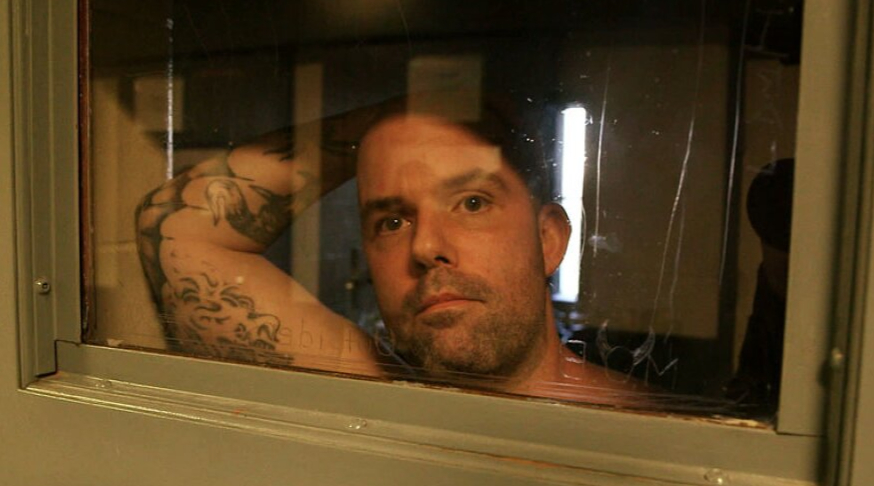
As we navigate this season of reflection and renewal, we want to share with everyone an open letter from our associate Gordon, who is currently serving a sentence at the Maine State Prison in Warren.
Writing on behalf of his fellow residents, Gordon reaches out directly to the diverse faith communities in and around the Portland, Maine area. His message is a call for compassion and a request for the faithful to consider the spiritual necessity of parole reform in our state.
Drawing on the themes of Lent and the promise of Easter, Gordon reminds us that the heart of many faith traditions is the belief that no one is beyond the reach of redemption. We invite you to read his words, share them with your congregations, and join in the conversation about what it means to truly "remember those in prison."

Dear friends,
My name is Gordon, and I am writing to you today on behalf of my fellow prisoners at the Maine State Prison in Warren.
In this holy season of Lent, as we prepare for the glory of Easter and the resurgence of hope, I want to speak with you today about an issue of significant importance to the people in our prisons and in the faith community, the re-establishment of parole in the State of Maine.
I come to you in the spirit of the scriptures:
“Continue to remember those in prison as if you were together with them in prison.”
Hebrews 13:3
In the truest sense, the transformation process from behind our prison walls and fences, from the crucible that is incarceration, is one of the holiest, most palpable forms of redemption one can experience. It is from this place of brokenness, of weakness and despair, this place of intense introspection, isolation and self conviction, that salvation can enter, like in no other place.
Sadly, the Maine Legislature has recently once again voted against reinstating parole. For me and my fellow “long timers” and “lifers”, this was a devastating blow and so we decided to turn to you, as people of faith, to ask for your help.
Parole is a carefully supervised process that allows incarcerated people who have demonstrated genuine rehabilitation to be considered for conditional release before the end of their sentence. In Maine, parole existed for decades as a structured pathway for accountability and reintegration, but it was abolished by the Legislature in 1976 during a nationwide shift toward determinate sentencing. Today, Maine remains the only New England state without a parole system.
Yet if the goal of our justice system is truly rehabilitation and redemption, parole has proven far more effective than rigid determinate sentencing, because it creates meaningful incentives for people to change and allows their transformation to be carefully evaluated. Across the country, parole has shown itself to be both humane and practical. It provides incentives for personal transformation, allows careful case-by-case review by a professional parole board, and saves taxpayer money by reducing unnecessary incarceration costs while still protecting public safety. Research consistently shows that structured reentry through parole supervision lowers recidivism and helps returning citizens rebuild stable, productive lives in their communities.
The possibility of parole also serves as a powerful incentive inside prison. When people know that genuine change may be recognized, they seek out education, drug treatment, vocational training, counseling, and faith programs. Hope changes how a person thinks about their future. Instead of serving their full sentence and returning to society unprepared, people begin working toward becoming the kind of neighbors and citizens they want to be and the way they wish to be perceived by others.
This is how Isaiah describes Jesus:
“He was despised and rejected by mankind,
a man of sorrows, and familiar with suffering.
Like one from whom people hide their faces
he was despised, and we held him in low esteem.”
Isaiah 53:3
Isaiah could have just as well been describing me and my brothers on the inside. We are people the world often chooses not to see. Jesus was innocent, we are not. But He came to share in the weakness and suffering of humanity, not to stand above it. He lived not among kings and rulers but among the poor, the rejected, and the powerless. Born the son of a carpenter in an occupied land where the strong ruled over the weak, He refused to accept a world built on domination and exclusion.
Instead, He taught that every person has dignity, that the least among us must not be forgotten, and that compassion and mercy should guide how we treat one another. For thousands of years, those who have found themselves on the margins of society, the poor, the persecuted, and the imprisoned, have looked to the story of Jesus and recognized in it their own suffering and their own hope for redemption.
And whether it was Zacchaeus up there in the tree who Jesus sought out to dine with and to forgive, or St. Paul, who went from tormentor to Gospel activist, or Jacob or David, scripture is filled with examples of how God has used broken people to fix broken things throughout the history of salvation.
So what are we asking you to do?
To begin with, if you are of a mind, please follow the parole issue and learn more about what parole is and how it can help rebuild lives, reunite families, improve public safety, save taxpayer money, reduce recidivism and redirect public resources to things like healthcare, housing, mental health services, education, nutrition and other badly needed social improvements.
As the the Brazilian theologian Hugo Assmann reminded us, “to live the commandment of love involves a political position whether one likes it or not. Today one cannot follow the gospel without political activity. It is impossible that one live responsibly without being concerned with the organization of society.”
Faith is not only a matter of prayer or personal transformation, it also calls us to act in the world to bring justice and mercy.
The church’s social justice teaching has been a bedrock in alleviating human suffering and restoring victims and offenders in the legal criminal justice system for many many years. As the social activist saint Dorothy Day once admonished us, if we are to truly follow the Gospel, we must also work for justice here on earth. In the parable of the fig tree, rather than cut the barren tree down, it was given time to be groomed and nourished and grow so that it could bear fruit again. This is what we are asking of you today.
And if I may add a personal note, while I am serving my sentence in Maine, my conviction originated in New Hampshire, where I was sentenced to life without parole. I am now 50 years old and have been in prison since I was 21. That is 29 years. Even if Maine reinstates parole, I would not be eligible for it. The work I do is to help others. This is my ministry.
And for the others, just because there is a parole bill does not mean they will be automatically released. It merely means that they could be eligible to be considered for release on parole to community supervision by a duly constituted parole board. That is a long and carefully vetted process that respects victims rights and prioritizes public safety.
So please, my brothers and sisters, if you can find it in your heart, please contact your Maine State Representatives and ask them to carefully reconsider passing LD 1941, “A bill to reinstate parole,” or a future parole bill at the next legislative session.
Please give your brothers and sisters on the inside some hope. Every morning, even from behind prison walls and fences and from within our cells, we find hope, and that comes from faith, and from the shining examples of the good people of Maine who visit us and support us.
As Easter nears our hope gets stronger, and regardless of the outcomes of this year’s parole bill, we will not give up that hope, because we know that one day things will change for the better. It will be different, whether here or at the time of our ultimate transition. And until then, we hold fast to the promise:
“God shall wipe away every tear from their eyes; and there shall no longer be any death; there shall no longer be any mourning, or crying or pain: the first things have passed away. And he who sits on the throne said, “Behold, I am making all things new.”
Revelation 21:4-5
Thank you my dear brothers and sisters from the bottom of our hearts. Have a Blessed Easter.


Comments