
Father Mike on Moral Imagination
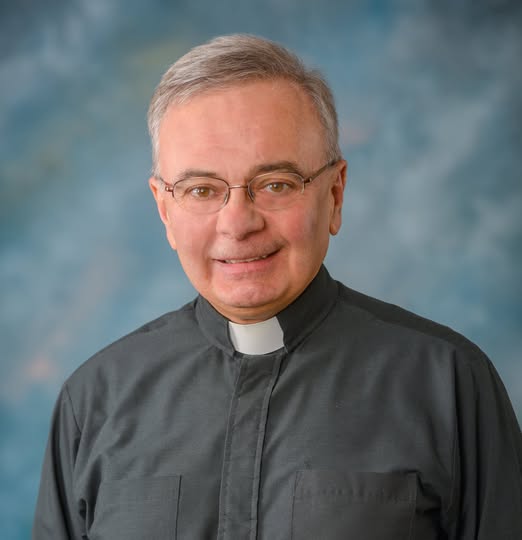
In this reflection, Father Michael Seavey, a retired Catholic priest from Portland, Maine, considers how faith can help us respond to today’s political and moral divisions. He writes about the danger of “the cruelty of moral indignation” and offers “the blessing of a moral imagination” as a more humane and faithful path forward.

Aldous Huxley was an acclaimed British philosopher and writer in the twentieth century. Witnessing the dark decades of the 1930s and 1940s, he offered this chilling view of the human condition: “The surest way to work up a crusade in favor of some good cause is to promise people they will have a chance of mistreating someone. To be able to destroy with good conscience, to be able to behave badly and call your bad behavior 'righteous indignation' — this is the height of psychological luxury, the most delicious of moral treats.”
In other words, the ability to inflict physical pain or emotional suffering on others and pass it off as “the right thing to do” for the “good of the cause” is often far too tempting to resist. He saw this on both extremes of the ideological spectrum in Europe. The rise of Adolf Hitler and the Nazi Party justified the oppression of entire minorities (Jews, Gypsies, gay people, Communists) and ultimately the deaths of tens of millions for the cause of racial purity and the punishment of those accused of thwarting progress.
Not to be outdone, Soviet Premier Joseph Stalin was also busy executing, massacring, or starving his own tens of millions for the similar cause of political purity and punishment for alleged crimes. But this is not just present in the extremes of Nazis and Communists. Ultimately, this isn’t about being a Nazi or a Communist; it is about being human, and the fallen nature of the human condition affecting us all.
Here is another, more recent example. In 2024, Michael Hayes, a former commander for the Irish Republican Army, claimed responsibility for the murder of Lord Mountbatten of the British royalty in 1979. He planned the bombing of Mountbatten’s large boat, which he frequently used for fishing or taking family and friends for rides off the coast of Ireland.
His murder was declared a punishment for his alleged crimes against the Irish people, for which he was never formally accused. He had no trial and, therefore, no opportunity to offer a defense. Unfortunately, he was not alone that day on his boat. His 14-year-old grandson, another 15-year-old young man, and others were also guests. Lord Mountbatten and the two adolescent boys were murdered in the blast.
On May 20, 2024, Michael Hayes admitted: “Yes, I blew him up. Thomas McMahon put the bomb on his boat but I planned everything. I am commander-in-chief.” Regarding the two teenage boys, Mr. Hayes offered: “They were casualties of war. Them children were not supposed to be on the boat in the first place. Yes, I regret that. That wasn’t meant to happen. I’m a father. I’m not made of stone. I was sickened. I cried.” (Belfast Telegraph)
Well, Mr. Hayes, you may or may not have known those boys were going to be on that boat when the bomb was planted. But you certainly knew they were on that boat when it was detonated by a remote-control device from a short distance away.
These examples are referred to as the “cruelty of moral indignation.” When we feel righteous about something crucial or important to us, we face the temptation of justifying anything and everything to accomplish the moral goal or restore the moral order, no matter who gets hurt. Or worse, making sure that lots of people do get hurt brings a certain satisfaction. It’s taking pleasure in the fact that someone else is finally suffering—or wanting that suffering so badly that we don't care if innocent people suffer in the process.
Again, it’s the fallen nature of the human condition. There are other words for it. When seeing my confessor, I’ve used the words “perverse pleasure” if something bad happens to someone who has been a thorn in my side or a national leader bringing out my scorn. It’s wrong! It’s just wrong!
There are two antidotes to this “cruelty of moral indignation.” One is secular and one is spiritual. The secular antidote is the “rule of law.” The rule of law assures that law enforcement has appropriate authority to maintain civil safety and peace. The rule of law then sets firm boundaries for what is allowed and prohibited as law is enforced. It also assures that those accused are not guilty unless proven so in a court with its own rules assuring fairness in the search for truth.
Everyone is entitled to protection under the rule of law, and everyone is responsible for its effectiveness. The rule of law is not just a privilege of citizenship; rather, it is the right of every human being because of human dignity. And human dignity takes us to the second antidote, which is spiritual.
The Beatitudes begin the Lord’s Sermon on the Mount. Outside the Passion and Resurrection narratives found in all four gospels, the Sermon on the Mount is arguably the most important teaching. That is chapters 5–7 in St. Matthew’s Gospel. It is God’s image of how people should live and treat one another. The Beatitudes are “attitudes of being” that radiate from the heart and move outward. They represent the entire life of Our Lord Jesus Christ that we are baptized into.
The Lectionary includes passages from this Sermon again for the next two Sundays, and then we enter the season of Lent. I suggest we take these passages very seriously as we prepare for this important penitential season. In the Sermon on the Mount, but especially in the Beatitudes, Jesus gives us the second antidote to the “cruelty of moral indignation.” That antidote is “the blessing of a moral imagination.” The “blessing of a moral imagination” is far more powerful and more truly human than the “cruelty of moral indignation.”
The Beatitudes give us God’s imagination while looking at the beauty and darkness of the world. It is a vision without cynicism or bitterness, but rather a vision of compassion and love. It is a vision locked onto the forces of evil and the destructive powers loose in our world. It is a vision of the many ways we are captive and captivated by these dark forces.
The Beatitudes are often considered naive or impractical. But they are, instead, an essential spiritual journey moving us forward slowly but surely in holiness. Meekness, mercy, grieving, peacemaking, hungering for justice, cleanliness of heart, and suffering for justice move from the heart outward, cleansing the darkness within us, transforming our hearts from stone to flesh, and revealing Christ’s presence in the world. He is already present by virtue of the Resurrection. We point out Christ’s presence so others can experience the transforming power of his love.
“Blessed are those who mourn” obviously refers to those grieving the loss of a loved one, a tragedy, or a trauma. But in another aspect, this beatitude relates to sorrow for the way people treat one another. We experience sadness for the times others are treated with contempt, brutality, or exploitation. We experience sadness for the times we were so treated and for the times we treated others in such a way.
The Beatitudes are truly counter-cultural. The Beatitudes are truly evangelizing. Kindness, humility, and the hand of friendship are far more evangelizing than polemics, harsh criticisms, and pointing the finger of shame. The Beatitudes offer an alternate path to the roads our nation is on. Too many on all sides of the political spectrum easily choose the “cruelty of moral indignation” over the “blessing of a moral imagination.”
For example, there can be no argument that our country has a serious issue with immigration and untold millions of people who either entered the United States without going through the legal processes or entered legally but have overstayed as visas or work permits expired. This is a major issue, and we cannot close our eyes to how this impacts the stability of our country or the rule of law that binds us all.
There also can be no argument regarding the horrible issue of substance addiction, particularly with drugs such as cocaine, heroin, fentanyl, and other even more deadly substances that have robbed us of loved ones and thousands upon thousands of young people who had a whole life before them. Over a three-year period, I presided at over 15 funerals for people who overdosed, and it tore my heart to shreds. This is also a border security issue.
This will now address the immigration issue that is very divisive and will bring the lens of the gospel to both sides of this issue and how fallen humanity affects the federal government and the protesters. So, please hang in there and hear me out.
Choosing between the “cruelty of moral indignation” or the “blessing of a moral imagination” applies to all sides of the immigration conflict. The federal government has a responsibility to secure the borders and ensure that immigration laws are enforced. They also have a responsibility to treat everyone within our borders with the respect due to the rule of law and their human dignity.
Law enforcement, with a list of names of known law violators, searching diligently for them and placing them under arrest, is well within the authority needed to uphold the rule of law. Holding them in custody until judicial hearings is also within their authority. Treating those accused of more violent crimes differently in custody also protects jail personnel and others also incarcerated. There can be no argument against safe, stable communities.
But labeling all law violators as the “worst of the worst” begins a process of dehumanizing that lowers inhibitions for humane treatment. Federal administration officials labeling those killed by federal officers as “domestic terrorists” before any investigation is begun—let alone the judicial process completed—strips the rule of law of needed boundaries.
Conducting massive sweeps of potential law violators focusing on people of color or those with accents, regardless of their status before the law, violates their human dignity. Holding them in makeshift prisons designed to lack basic human necessities violates their human dignity. “Alligator Alcatraz”? Really?
Arresting people reporting to immigration offices as the law requires negates the entire purpose of having immigration laws in the first place.
For those demonstrating against federal agents in their localities, the same choice prevails. Are you going to choose the “cruelty of moral indignation” or the “blessing of a moral imagination”? Are your actions going to recognize the human dignity of every federal agent, or dehumanize them in ways that encourage violence against them? Recording the actions of federal officers in your community is a legitimate and often necessary responsibility for holding officers accountable when they cross lines of self-defense or physical altercations. But will you also record any violence perpetrated against those same officers? Will you record those hiding within your peaceful demonstration to create chaos, destroy property, and injure others?
Does publishing the home addresses of federal officers, thus exposing their families to violence, enhance or tear down human dignity and the rule of law? How does that differ from the two teenagers murdered in the plot to kill Lord Mountbatten? There is no difference. “Casualties of war”! Really.
On both sides of this issue, it is clear the dark face of the “cruelty of moral indignation” is alive and well, as it is throughout the human condition.
The lens of the gospel cannot be limited to one side of the political spectrum. This is a moral choice impacting the entire human community regardless of where one sits on the political spectrum. The Beatitudes have the ability to create peace among all groups of people and reveal the beauty of God’s presence in the building of truly human communities. A few weeks ago, I preached on this as Rev. Martin Luther King Jr. called it: “the beloved community.”
Lent begins in a few weeks, and the Sermon on the Mount can assist us in preparing for that courageous inventory of one’s heart and soul for ongoing conversion. How seriously will we take that opportunity? How faithful will we truly be? The answer will impact which choice prevails in our nation: the “cruelty of moral indignation” or the “blessing of a moral imagination.”
Father Mike Seavey is a retired Catholic priest and activist from Portland, Maine. His writing reflects on faith, human dignity, justice, and the moral responsibilities people share in public life.


Comments